EXISTING MEMBER LOGIN
Forgot password? Please contact us membership@rarechromo.org
Registered member but first time log in? Just go to the Unique Members Area Registration Form
Not yet a registered member? Just go to the Become A Member page
If you’re looking to get involved in research, there are often many projects and studies taking place. Take a look at the current opportunities that we have come across.
An informal carer aged 18 or over. Someone who is supporting a person with a formal diagnosis of both ID and dementia. Involved in, or have been involved in, their care and the process of getting a dementia diagnosis.
Unfortunately, you will not be able to take part if you care for someone with Down’s syndrome and dementia.
Taking part would involve an interview with a choice of being in person, by telephone or by video call (Microsoft Teams or Zoom).
Learn more and get involved by contacting klr483@student.bham.ac.uk
parents or guardians of a child (0-17 years) with a life-limiting condition in England?
Taking part would involve a short interview and an online workshop
Learn more and get involved by contacting kentownresearchstudy@kcl.ac.uk
Anyone with, or has a family member with, a genetic or rare genetic condition
Learn more and get involved by contacting carol.porteous@paediatrics.ox.ac.uk
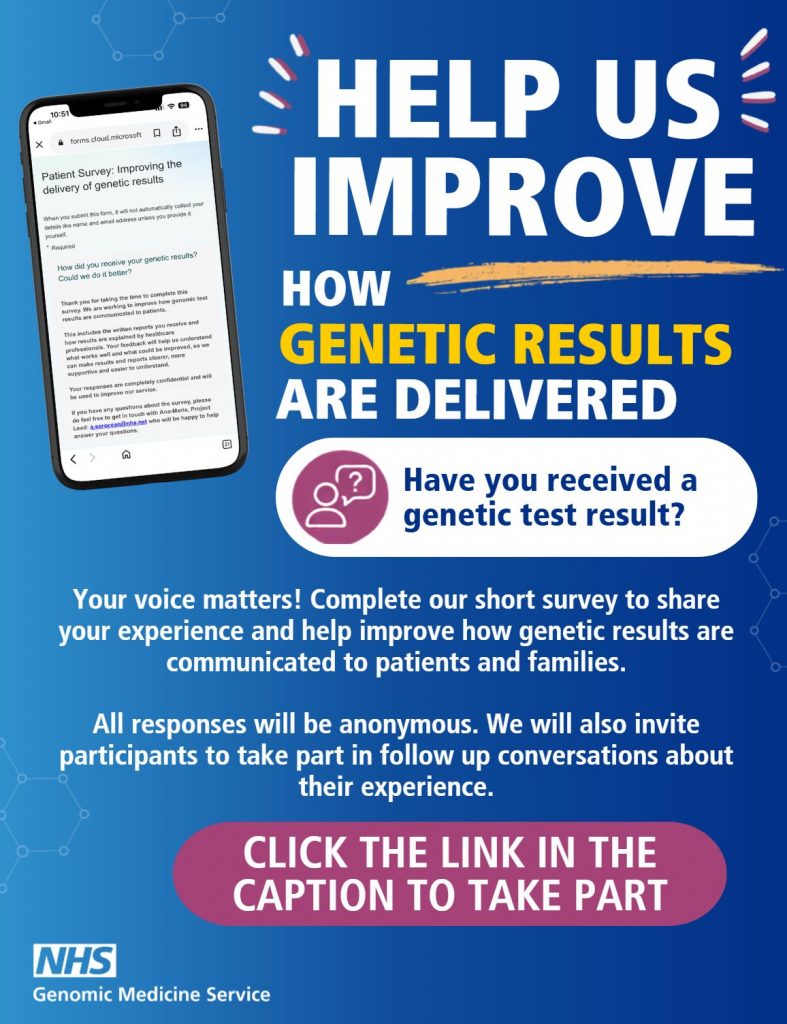
People who have received a genetic test result from the NHS.
Help by taking art in a short survey to better understand patients’ experiences of receiving genomic test results, how easy reports are to understand, and what could be improved to make them clearer, more accessible, and more useful.
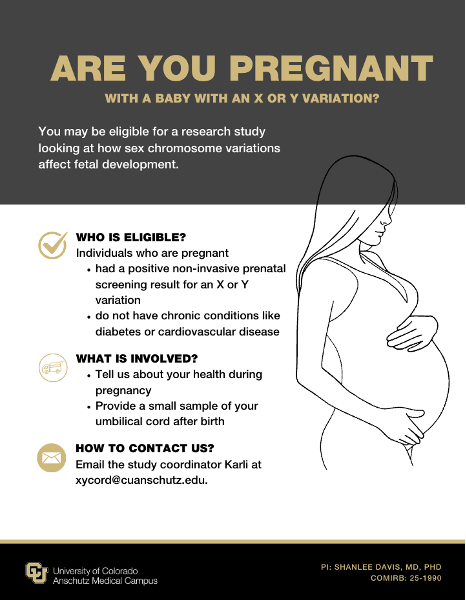
Anyone who is pregnant with a baby with an X or Y variation?
The study involves sharing details of your health during your pregnancy and supplying a small sample of your umbilical cord after birth.
Email xycord@cuanschutz.edu for more information or to get involved
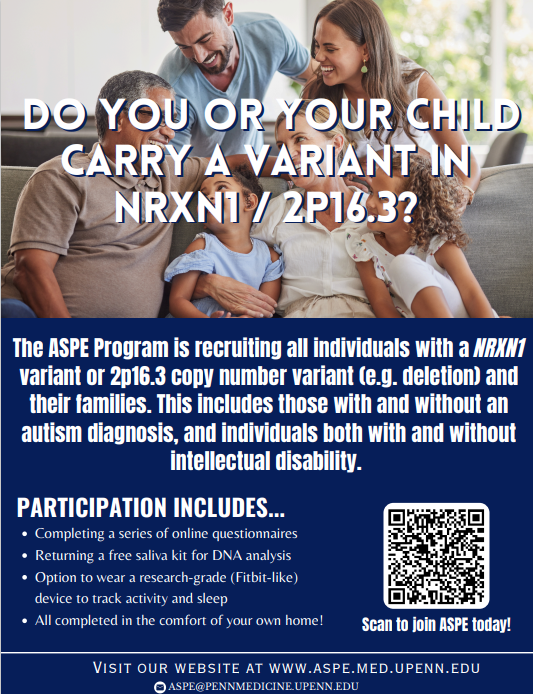
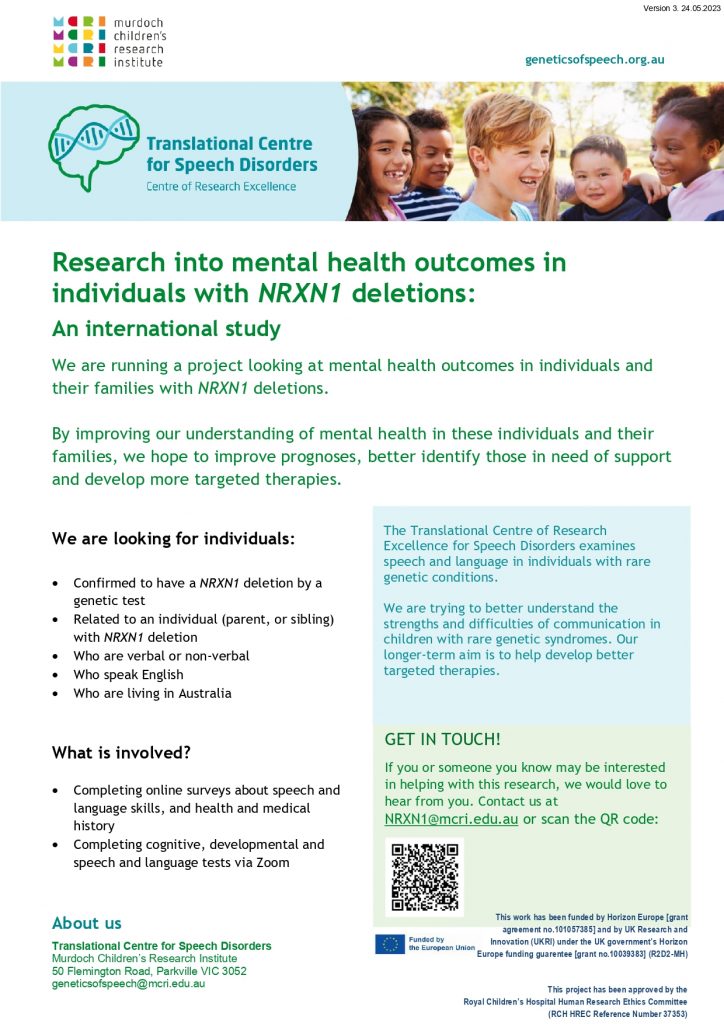
People with, or who have children with, a variant in NRXN1 / 2P16.3 gene
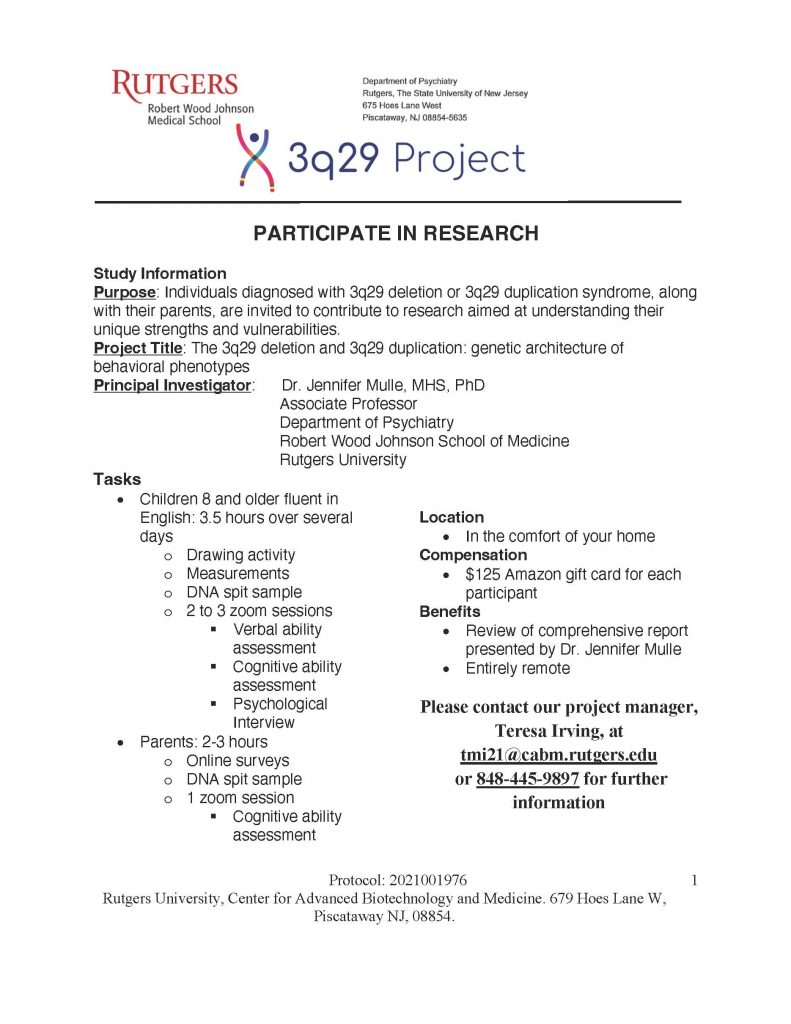
individuals diagnosed with 3q29 duplication or 3q29 deletion syndrome
Learn more by contacting 3q29@cabm.rutgers.edu or the Project Manager, Terry Irving, directly at tmi21@cabm.rutgers.ed

Siblings (aged 11-15 years old) and/or their parents.
Contact Zoe Starkie at z.starkie@uea.ac.uk for further information on taking part in a one hour interview.
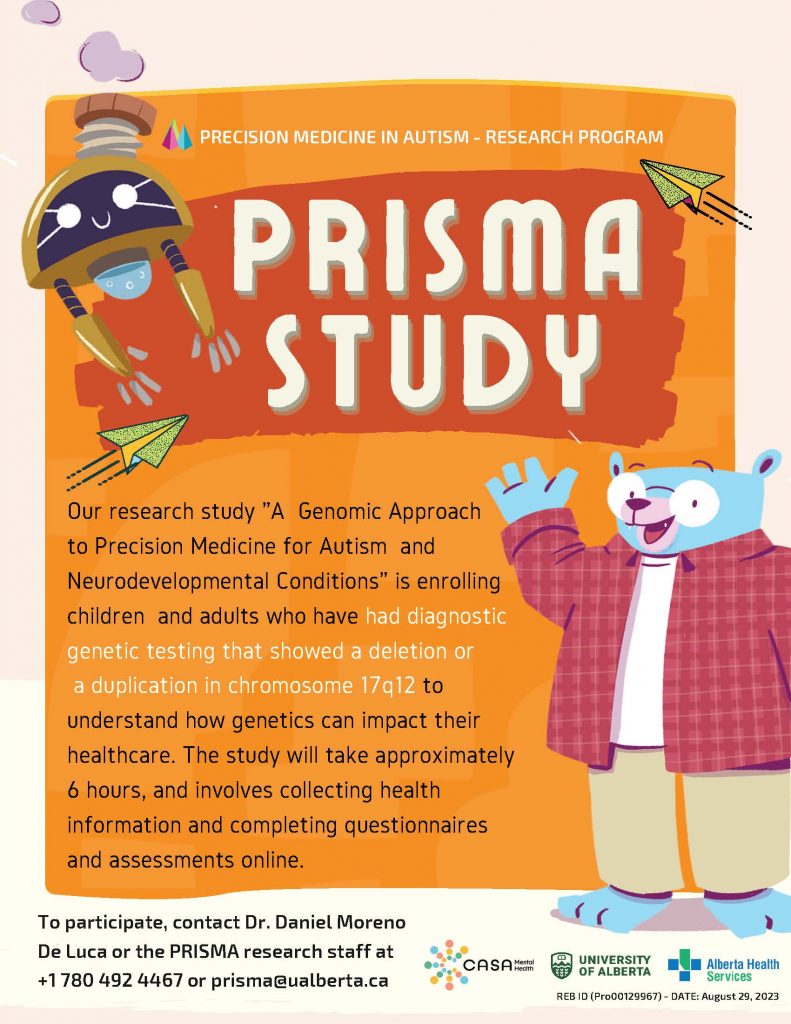
Children and adults aged 6 months to 90 years who have had diagnostic genetic testing that showed a deletion or a duplication in chromosome 17q12.
To participate, contact Dr. Daniel Moreno
De Luca or the PRISMA research staff at
+1 780 492 4467 or prisma@ualberta.ca

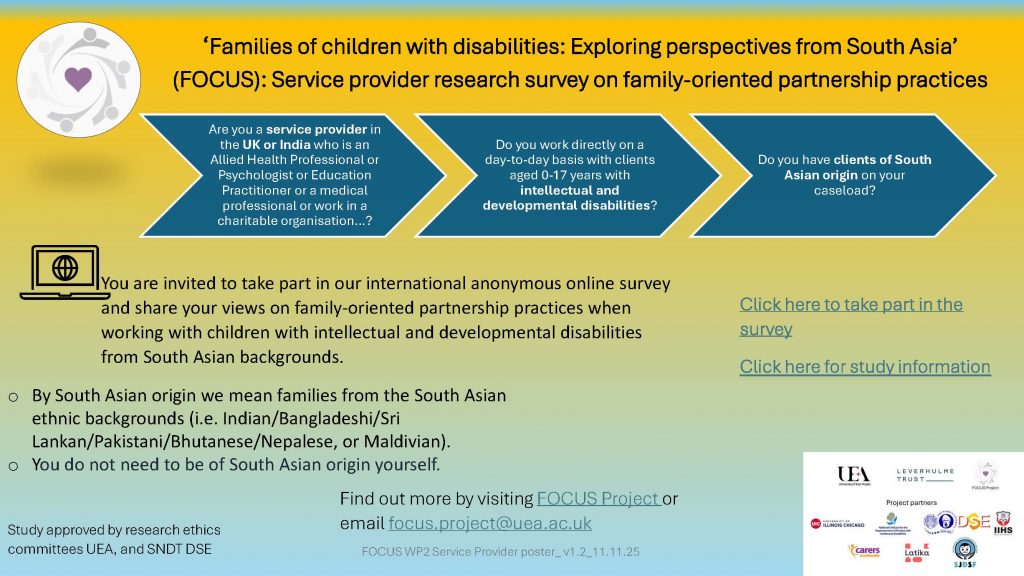
South Asian families in India, and the UK who have a loved one with an intellectual and developmental disability.
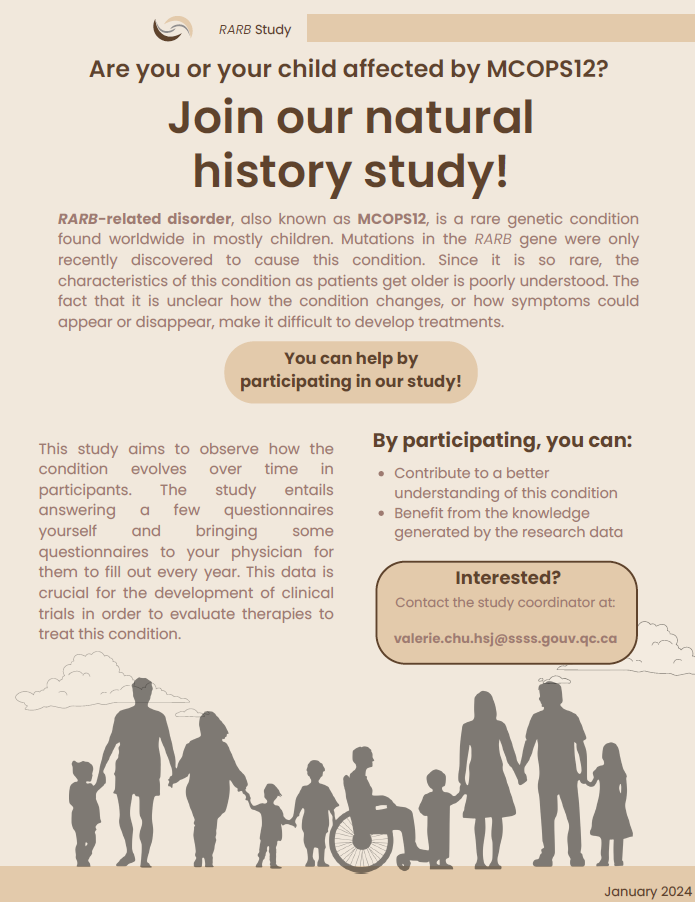
People affected by RARB-related disorder (also known as MCOPS12)
Email researcher for more info
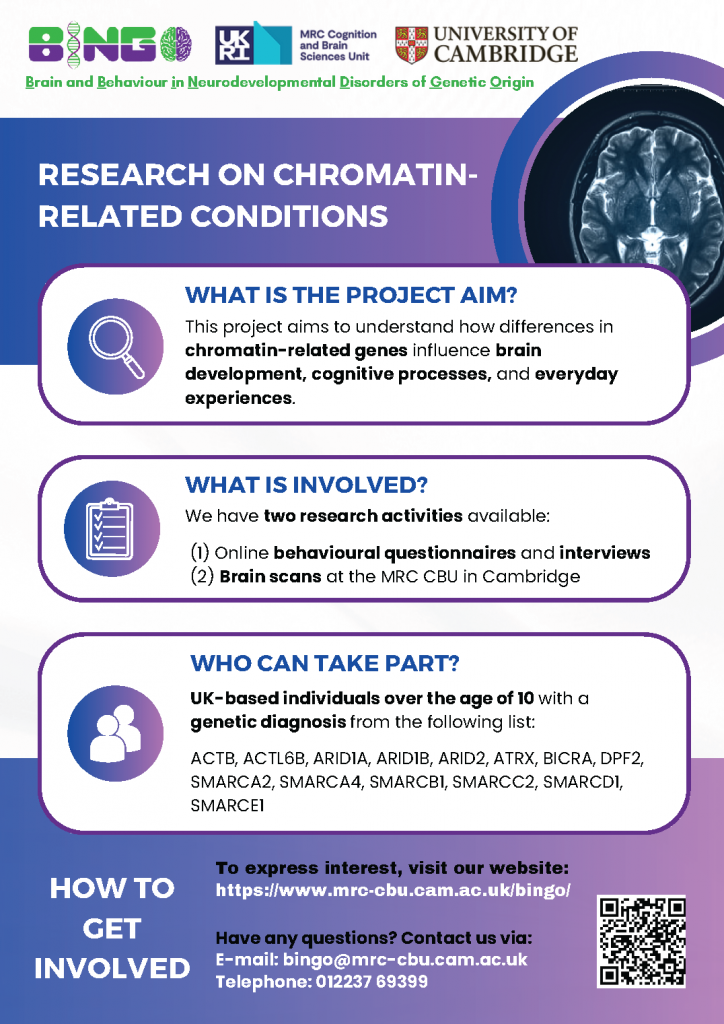
UK-based individuals over the age of 10 with a genetic diagnosis from the following list:
ACTB, ACTL6B, ARID1A, ARID1B, ARID2, ATRX, BICRA, DPF2, SMARCA2, SMARCA4, SMARCB1, SMARCC2, SMARCD1, SMARCE1
If you or someone you know may be interested in helping with this research, either by writing to NRXN1@mcri.edu.au or fill in the survey
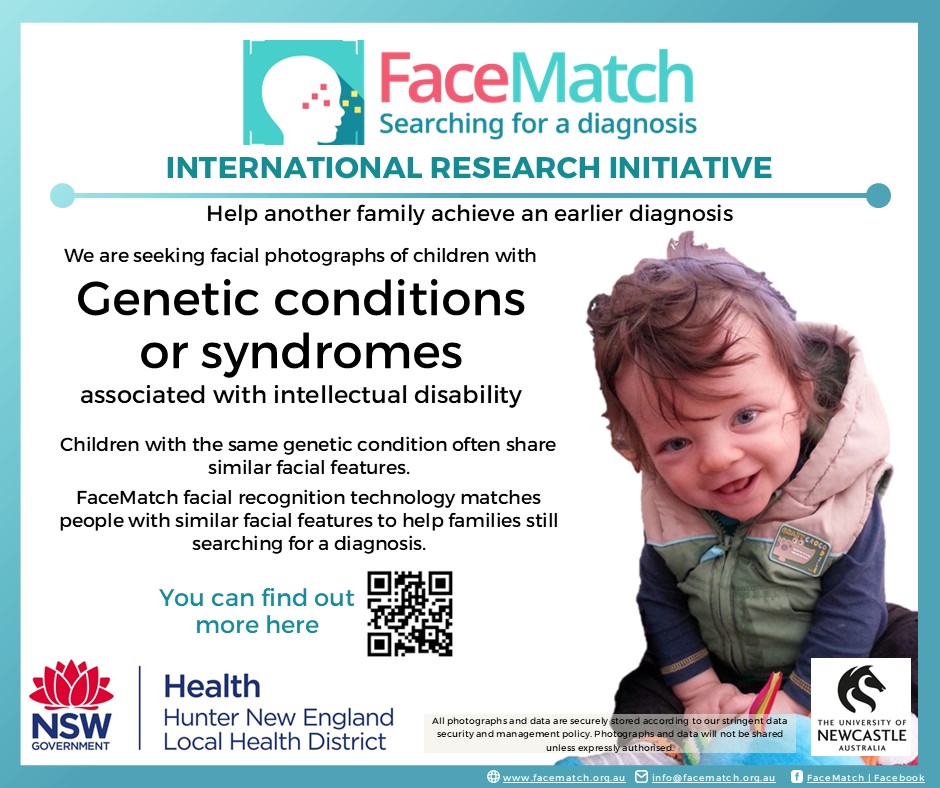
Families of children with a diagnosed intellectual
condition or syndrome
Children (8–16) and young adults (16–29) in England living with a rare condition and their carers.
Email hello@rarerevolutionmagazine.com for more information.